Introduction: when heritage meets modern ambition
Mahindra Vision S: The name “Vision S” may sound futuristic, but for Mahindra it represents something far more grounded: combining the rugged DNA that has defined the brand with future-ready technology and design. The Mahindra Vision S concept offers a walkaround view of what the Indian SUV maker envisions for its next-generation compact off-road capable SUV. Built on the modular NU_IQ platform and teased with multiple design cues, the Vision S is meant to set a new benchmark in its class.
As we take you through the exterior, interior, performance underpinnings, technology and positioning of the Mahindra Vision S, you’ll see why this concept matters not just as a standalone model but as a sign-post for Mahindra’s broader SUV strategy.
Exterior walkaround: bold, boxy and built to be noticed
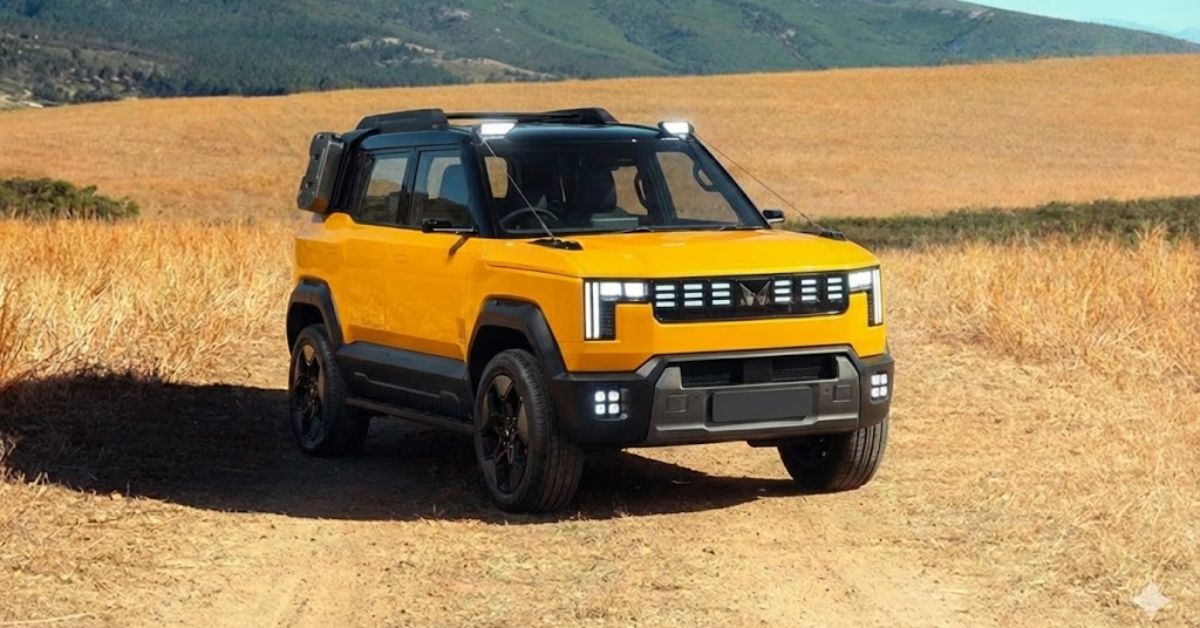
From the very first glance, the Mahindra Vision S stands out. Its chunky proportions, squared-off silhouette, high ground clearance and strong wheel arches give it a presence that says “serious SUV.” The front fascia is dominated by an upright grille, L-shaped LED daytime running lights that seamlessly flow into the grille surface, and auxiliary roof-mounted lamps that hint at off-road readiness.
The side profile reveals more of the Vision S’s character: large, machined alloy wheels, flared cladding around the wheel arches, flush-fitting door handles that enhance the sleekness, and a roofline that holds a floating-roof illusion thanks to blacked-out pillars. On the rear quarter, a ladder or storage box mounted on the side (in the concept) evokes an expedition-ready feel.
At the rear, the Mahindra Vision S continues to impress: vertical LED tail-light strips, dual-tone bumper with skid-plate element, and a tailgate-mounted spare wheel that underscores the rugged persona. The overall design uses cues from Mahindra’s past off-roaders, yet presents them in a modern, aggressive package. The shape and finish suggest that functionality (e.g., rear visibility, loading, spare wheel access) was balanced with design styling.
What this exterior walkaround tells us is that the Vision S doesn’t attempt to hide its ambition. It wants to be seen as a capable, purposeful machine rather than just a style statement. That in itself is significant in a segment increasingly crowded with crossover styling.
Platform & powertrain: the modular heart of Mahindra Vision S
Under its robust exterior, the Mahindra Vision S is built on the NU_IQ modular platform. This architecture is designed to accept multiple powertrain options — petrol, diesel, hybrid and fully electric — as well as support both front-wheel and all-wheel drive configurations. This versatility gives Mahindra a strategic advantage in being able to scale and adapt the model to different markets and powertrain requirements.
In the concept form, while exact power numbers are not published, indications suggest that the Vision S will feature variants that could include a 2.0 litre mStallion petrol unit, a 2.2 litre mHawk diesel and an electric version with a battery pack potentially in the 59 kWh–79 kWh range.
Why does this matter? Because it gives the Vision S the potential to address a wide spectrum of buyer needs: traditional ICE buyers, hybrid-transition buyers and full EV buyers. Mahindra’s approach here is about future-proofing: ensuring that when EV regulation, taxation, and customer expectations move, the platform is ready. The walkaround cues — high ground clearance, strong wheel arches, off-road oriented styling — also hint at an all-terrain capability, perhaps with a genuine 4×4 system in higher trims, thanks to the architecture’s flexibility.
Mahindra Vision S Interior & cabin experience: utility meets modernity
Stepping inside the Mahindra Vision S, the emphasis is clearly on functionality, utility and tech-forward design. The cabin’s colour theme shown in the concept uses contrasting blue and black surfaces, accented with silver and yellow, giving it a lively, premium feel. Two large displays dominate the dashboard — one for the digital instrument cluster, another for the central infotainment system — and they impart a sense of digital sophistication.
The steering wheel is a three-spoke design with Vision S badging, and the dash includes physical tactile controls in the centre console rather than relying entirely on touch, which suggests Mahindra’s awareness of usability in diverse conditions (such as off-road or when wearing gloves). A panoramic glass roof (or large glass sunroof) is teased, which heightens the sense of space and light in the cabin.
Practical elements are not forgotten: tall greenhouse for good outward visibility, a flat-floor centre tunnel (as seen in concept imagery) for ease of movement, and seats with contrast stitching and bolsters that suggest a blend of comfort and support. Rear occupants should have good headroom and legroom given the upright design. The ladder or box on the exterior suggests the interior may also be configured for outdoor gear or modular storage.
These cabin details reinforce the image that the Mahindra Vision S walkaround wants to project: that of a rugged yet comfortable daily SUV — one which is equally at home on an urban commute and a weekend trail run.
Mahindra Vision S Tech and connectivity: modern demands, met
In keeping with current-day expectations, the Mahindra Vision S concept is laden with technology. The dual-screen setup, large infotainment display, and digital cockpit are complemented by next-gen software platform — Mahindra is believed to integrate its upcoming AdrenoX operating system in this model, supporting features such as over-the-air updates, vehicle profiles, connected car services and seamless smartphone integration.
For safety and driver assistance, the concept suggests Level 2 ADAS features will be standard or widely available: including adaptive cruise control, lane-keep assist, autonomous emergency braking, blind-spot monitoring and a 360-degree camera. Although not all details are final, Mahindra has indicated that its future SUVs will aim for high safety ratings and global crash-worthiness.
On the convenience front, features such as wireless charging, ventilated seats, flat-bottom steering, multiple drive modes, electronic parking brake with auto-hold, and tire-pressure monitoring (TPMS) are all part of the expectation set by the concept’s presentation. In effect, the Mahindra Vision S is set up to meet the demands of tech-savvy, comfort-oriented buyers without diluting its rugged persona.
Mahindra Vision S Off-road credentials: more than just looks
What sets the Mahindra Vision S apart from many compact SUVs is how it embraces off-road style and substance. Rather than simply borrowing rugged styling cues, the Vision S implies genuine capability. Strong ground clearance, chunky tyres, wheel-arch cladding, skid plate, roof-mounted auxiliary lamps and the ladder/gear box mounted externally — all of these signal that this vehicle is intended to handle more than just mild rough roads.
Mahindra’s walkaround presentation emphasises that the SUV is built with real usage in mind — be it a wilderness drive, adventurous weekend escape or even just a rugged city commute needing durability. The modular NU_IQ platform further supports this by offering 4×4 potential and different drive configurations. This readiness gives Vision S an edge in a market where many rivals lean heavily toward urban road use and seldom venture into true off-road territory.
Mahindra Vision S Specification snapshot: what we know so far
Below is a table summarising the key expected specifications of the Mahindra Vision S based on current reports and walkaround reveals.
| Specification | Mahindra Vision S (Expected) |
|---|---|
| Platform | NU_IQ modular architecture (supports ICE/hybrid/EV, FWD/AWD) |
| Length / Size | Under-4-metre / compact SUV segment (as per concept) |
| Powertrains | 2.0L mStallion petrol, 2.2L mHawk diesel, EV with 59–79 kWh battery pack (indicative) |
| Drive Configurations | FWD/AWD capable, different market versions likely |
| Exterior Features | LED DRLs, roof-mounted auxiliary lamps, ladder/gear box mount, skid plates |
| Interior Features | Dual large displays, panoramic roof, flat-bottom steering, contrast upholstery |
| Technology & Safety | Level 2 ADAS, digital cockpit, connected car features, over-the-air updates |
| Estimated Price | Though no final number yet, similar segment positioning in India suggests competitive price — some reports say ~₹10.50-17.50 lakh (ex-showroom) for the concept/compact format. |
It should be noted that these are expected figures, derived from concept walkaround details and industry commentary. Final production specifications may differ.
Mahindra Vision S: Market positioning and significance
The Mahindra Vision S is not just another concept car. It signals a strategic move for Mahindra in multiple ways. First, it addresses the compact SUV segment which in India and many global markets is highly competitive and high-volume. By creating a rugged, feature-rich compact SUV, Mahindra aims to carve out a niche: buyers who want the versatility of a city SUV plus genuine off-road readiness and premium tech.
Second, the NU_IQ platform’s multi-powertrain flexibility allows Mahindra to future-proof the model. As regulation and consumer sentiment shift toward electrification, the company can offer petrol, diesel, hybrid or EV variants on a single architecture. This reduces development cost, accelerates time-to-market and allows for global export potential.
Third, the design language embodied in the Vision S (and its sister Vision-series models) shows Mahindra’s intent to modernise its brand image. The walkaround reveals a vehicle that looks contemporary, aspirational and global — not just local. This could help Mahindra in export markets as well as in urban India, where buyers expect high tech and premium feel even at competitive pricing.
Mahindra Vision S: Potential rivals and competitive landscape
In the compact SUV / sub-4-metre segment, the Mahindra Vision S will face competition from both domestic and international models. Rival models conceivably include compact SUVs from brands such as Hyundai, Kia, Maruti Suzuki and others. However, what gives Vision S a differentiation is its off-road styling and modular EV/ICE architecture.
For buyers comparing alternatives, the key questions will be: how much does the production Vision S retain from the concept? Will the pricing and running costs be competitive? And will it deliver on the promise of capability as well as comfort? The walkaround previews set high expectations. If the production version can deliver a similar sense of ruggedness, premium tech and versatility, the Vision S could redefine what a compact SUV means in India.
Launch timeline and pricing expectations
Mahindra has indicated that the Vision S concept will form the basis of a production model expected around 2026–2027. Given development cycles, pilot production and market readiness, this timeline seems realistic. Some reports indicate that a Jan-2027 launch is possible for the compact format.
As for pricing, while final numbers are yet to be confirmed, speculation suggests an ex-showroom price range of approximately ₹10.50 lakh to ₹17.50 lakh for India for the initial variant of the Vision S Compact SUV. This pricing aims to undercut many global imports while delivering premium feel and tech.
Of course, pricing will depend on trim levels, powertrain (petrol/diesel/EV), features, localisation and market conditions. Yet from a walkaround perspective, the vehicle seems positioned at value-tech-premium intersection rather than ultra-luxury.
Strengths highlighted in the walkaround
From the walkaround cues and previews, several clear strengths emerge for the Mahindra Vision S:
- Distinctive design that stands out in a sea of similar shaped crossovers. It projects capability and confidence.
- Modular architecture (NU_IQ) offering flexibility in powertrains and drive modes.
- Rich interior tech and premium touches for the segment: large screens, panoramic roof, tactile controls.
- Genuine off-road styling with possibility of associated capability — which is rare in compact-SUV segments focused purely on road use.
- Forward-looking positioning: if Mahindra keeps pace with EV/hybrid variants, the model will remain relevant in evolving regulatory environments.
Potential weaknesses and concerns
While the walkaround presentation is compelling, as a future production model the Mahindra Vision S will need to overcome certain challenges:
- Translating concept design into cost-effective production is always challenging. Some features may be scaled back for production.
- Price will be critical: delivering high tech and robust capability while keeping costs competitive will demand localisation and efficient manufacturing.
- Real off-road capability may add cost, weight, complexity and fuel efficiency trade-offs; Mahindra will have to balance these for urban buyers.
- The market is crowded: many compact SUVs now offer premium features, so the Vision S will need to convert interest into purchase.
- Final EV variant specifications, charging infrastructure readiness, battery cost and performance will all influence buyer perception.
Why the walkaround matters: future-proofing Mahindra’s SUV lineup
The walkaround of the Mahindra Vision S is more than an early teaser. It sets the tone for Mahindra’s next decade of SUVs. While many manufacturers chase luxury or mass market extremes, the Vision S represents a balanced approach: rugged + tech + compact. For India and global emerging markets where SUV growth remains strong, such a vehicle could hit a sweet spot.
Furthermore, Mahindra’s emphasis on platform flexibility (NU_IQ) signals a strategic pivot: instead of separate architectures for ICE and EV, a single architecture that can do both is more sustainable and cost-efficient. For buyers, that means more variant choice, better residual value and greater future readiness.
From a branding perspective, the Vision S aligns with the ‘go-anywhere’ ethos that has defined Mahindra’s legendary models (such as the Scorpio and Thar), yet it shifts the image into modern terrain with premium tech and urban usability. This helps Mahindra appeal to younger, aspirational buyers who want both ruggedness and refinement.
Mahindra Vision S Final thoughts: Walkaround promises, production delivers
After walking around the concept, it’s clear that Mahindra is serious about pushing boundaries with the Vision S. The blend of bold design, modular architecture, tech and rugged character offers a compelling proposition. The question now is how faithfully the production version will carry these qualities, how competitively Mahindra will price and equip it, and how well the company executes on localisation, quality and service.
For buyers keeping an eye on the compact SUV segment, the Vision S should be on the radar. If Mahindra delivers a production vehicle close to this walkaround promise, it could shift the frame of reference: what does a compact SUV need to offer in 2026-27? Ruggedness, versatility, tech-rich cabin and value. The Vision S embodies all of these.
In short, the Mahindra Vision S is not just a concept to admire – it’s a sign of what Mahindra intends to become: an SUV maker that offers more than just mobility, but capability, technology and future readiness. If you’re a buyer who doesn’t want to compromise, the wait for Vision S could be worth it.