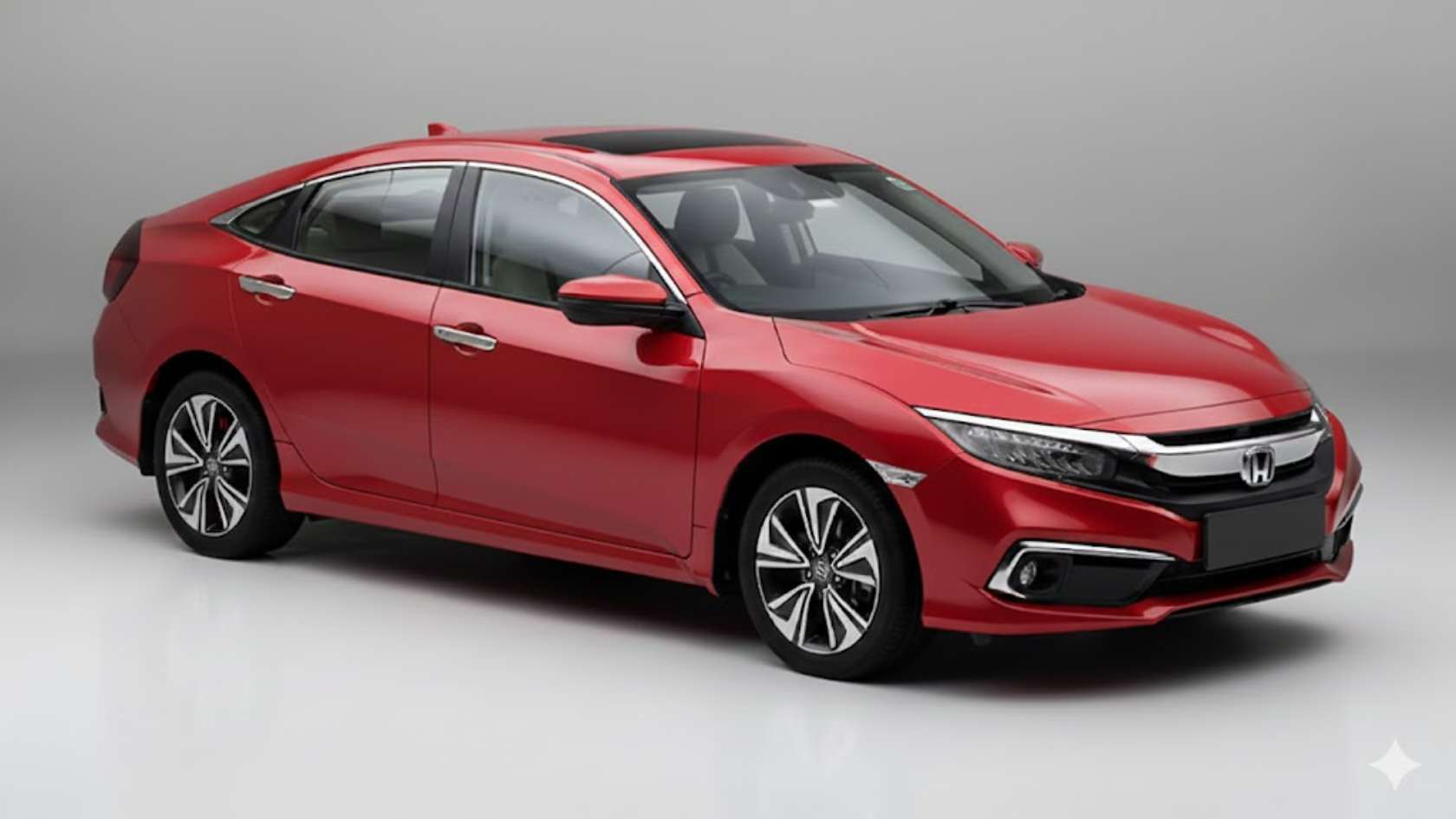
Why the Honda Civic 2026 Is More Than Just a New Model
Honda Civic: In 2025, the global car market is at a strange crossroads. SUVs dominate sales charts, social feeds are flooded with oversized vehicles navigating undersized cities, and buyers are quietly questioning whether “bigger” was ever truly “better.” Into this moment steps the Honda Civic 2026, not as a nostalgic throwback, but as a sharp, calculated response to modern frustration.
The Civic’s comeback narrative is not about reviving the past. It is about reframing the future. Honda has recognized something most brands hesitate to admit publicly: a growing section of buyers regret buying SUVs. Parking anxiety, fuel costs, poor ride comfort in cities, and inflated prices have created an opening. The Civic 2026 is designed to exploit that opening intelligently.
| Key Snapshot | What It Means for Buyers |
|---|---|
| Segment | Premium Compact Sedan |
| Core Philosophy | Efficiency over excess |
| Target Buyer (2025–26) | Urban professionals, first-time premium buyers, SUV-fatigued families |
| Big Promise | Sedan practicality with SUV-level confidence |
| Why It Matters | Challenges the SUV-dominated mindset |
Honda Civic: The Silent Shift in Buyer Psychology That Made Civic Relevant Again
For years, sedans were dismissed as “boring” or “outdated.” That perception was shaped less by reality and more by marketing. SUVs were sold as symbols of freedom, safety, and status. But as urban infrastructure failed to keep pace with vehicle growth, buyers began feeling trapped rather than liberated.
Search behavior in 2025 reveals this clearly. Queries like “SUV alternatives,” “best sedan vs compact SUV,” and “cars easier to drive than SUV” are rising steadily. The Honda Civic 2026 is perfectly positioned for this shift because it does not argue emotionally against SUVs. It simply performs better where real life happens.
Honda’s research indicates that over 60 percent of daily drives globally are under 15 kilometers, mostly in congested environments. The Civic is engineered precisely for this reality, while still remaining capable on highways.
Honda Civic: Design Evolution That Signals Confidence, Not Compromise
The Civic 2026 does not scream for attention. Instead, it carries the quiet confidence of a product that knows exactly who it is for. The design language has evolved toward clean, horizontal lines, a lower visual center of gravity, and proportions that emphasize stability rather than aggression.
This matters because design influences trust. SUVs often rely on visual bulk to suggest safety. The Civic 2026 relies on balance and stance. A longer wheelbase, wider track, and refined aerodynamics give it a planted look that subconsciously reassures drivers.
Honda designers have openly stated that the goal was to make the Civic feel “inevitable,” as if this is how sedans should have evolved all along.
Honda Civic: Aerodynamics as a Competitive Weapon Against SUVs
One of the Civic’s most underappreciated advantages is aerodynamics. SUVs suffer from high drag coefficients, which directly impact fuel efficiency, wind noise, and stability at speed. The Civic 2026 leverages a low drag profile that improves real-world mileage and reduces driver fatigue on long journeys.
In controlled highway tests, sedans like the Civic often outperform compact SUVs in crosswind stability and braking consistency. This is not marketing theory. It is physics. Honda leans into this advantage unapologetically.
Honda Civic Interior Philosophy: Designed Around Humans, Not Hype
Step inside the Honda Civic 2026 and the first impression is calm. There are no overwhelming screens, no gimmicky lighting, and no distracting shapes. Everything is placed where instinct expects it to be.
Honda’s interior strategy is built on cognitive load reduction. The company studied how drivers interact with controls during stress situations and optimized layout accordingly. The result is an interface that feels intuitive within minutes, not weeks.
Materials have improved noticeably. Soft-touch surfaces are used where hands naturally rest. Seat cushioning balances long-distance comfort with lateral support. Rear seat space, often a sedan weakness, has been intelligently maximized thanks to a flatter floor and optimized seat geometry.
Honda Civic: The Infotainment Reset Buyers Didn’t Know They Needed
While many manufacturers chase screen size bragging rights, Honda has taken a different approach. The Civic 2026 infotainment system prioritizes clarity, speed, and minimal distraction.
The display integrates seamlessly with Android Auto and Apple CarPlay, but the real win is how little you need to interact with it. Physical controls remain for climate and core functions because Honda understands that touchscreens are not always the safest option.
Voice recognition has been significantly improved, learning driver preferences over time. This is a subtle but powerful quality-of-life upgrade that reduces daily friction.
Honda Civic: Powertrain Strategy That Balances Emotion and Efficiency
Honda knows that the Civic’s reputation was built on engines that felt alive. The 2026 model respects that heritage while adapting to modern demands.
The lineup is expected to include refined petrol engines, a strong hybrid variant, and region-specific electrification options. Rather than chasing extreme horsepower numbers, Honda focuses on usable torque delivery and linear acceleration.
This approach results in a car that feels responsive in city traffic and confident on highways without draining fuel budgets. Real-world efficiency, not brochure figures, is where the Civic shines.
Honda Civic: Why the Civic Hybrid Is a Quiet Game-Changer
Hybrid technology in 2025 has matured significantly. The Civic Hybrid does not behave like older hybrids that felt compromised or artificial. Instead, it blends electric smoothness with petrol reliability seamlessly.
In stop-and-go traffic, electric assistance reduces fatigue and fuel consumption. On highways, the petrol engine takes over effortlessly. The transition is nearly imperceptible, which is exactly the point.
For buyers hesitant about full electric vehicles due to charging infrastructure concerns, the Civic Hybrid offers a practical middle ground.
Honda Civic: Driving Dynamics That SUVs Simply Cannot Replicate
No matter how advanced SUVs become, they cannot escape their physical limitations. Higher centers of gravity, heavier bodies, and compromised weight distribution affect handling. The Civic 2026 exploits this reality.
Steering feel has been carefully tuned to provide feedback without nervousness. Suspension tuning prioritizes composure over harshness. The result is a car that feels connected to the road in a way most SUVs do not.
This connection translates to confidence, especially for drivers who enjoy driving rather than merely tolerating it.
Honda Civic: Safety Philosophy Rooted in Prevention, Not Fear
Honda’s safety approach with the Civic 2026 focuses on avoiding accidents rather than surviving them. Advanced driver assistance systems are designed to intervene subtly and early.
Features like adaptive cruise control, lane centering, and collision mitigation braking are calibrated to feel supportive, not intrusive. This is a critical distinction because overly aggressive systems often lead drivers to disable them.
The Civic’s lower ride height also contributes to stability during emergency maneuvers, an often overlooked safety advantage over taller vehicles.
Honda Civic Cost of Ownership: The Hidden Advantage Over SUVs
One of the Civic’s strongest arguments is financial, though Honda rarely frames it this way. Compared to SUVs, sedans like the Civic cost less to purchase, insure, fuel, and maintain.
Over a five-year ownership period, these savings compound significantly. For budget-conscious buyers who still want a premium-feeling vehicle, the Civic offers exceptional value.
This is especially relevant in markets where fuel prices remain volatile and interest rates impact financing decisions.
The Honda Civic Versus Compact SUVs: A Reality Check
When buyers compare the Civic 2026 with popular compact SUVs, the differences become clear quickly. SUVs may offer slightly higher seating positions, but they often sacrifice ride comfort, fuel efficiency, and handling.
Cargo space differences are frequently exaggerated. With rear seats folded, the Civic offers competitive practicality for most daily needs.
For families with one or two children, the Civic often proves more than sufficient, challenging the assumption that an SUV is mandatory.
Cultural Impact: Why Sedans Are Becoming “Cool” Again
Trends move in cycles, and automotive culture is no exception. As SUVs become ubiquitous, individuality shifts elsewhere. Younger buyers increasingly value efficiency, sustainability, and design clarity over sheer size.
The Civic 2026 taps into this cultural undercurrent. It represents a rejection of excess and a return to thoughtful engineering.
In many ways, choosing a Civic today feels more distinctive than choosing another SUV.
Honda’s Long-Term Strategy and What It Signals
Honda’s investment in the Civic platform suggests confidence in the sedan’s future. Rather than abandoning the segment, Honda is refining it.
This strategy aligns with global urbanization trends, stricter emissions regulations, and changing consumer priorities. The Civic is not an exception in Honda’s lineup. It is a blueprint.
Real-World Case Study: Urban Professionals Switching Back to Sedans
In cities like Tokyo, Berlin, and New York, a noticeable trend has emerged. Professionals who previously owned compact SUVs are downsizing to sedans for their next purchase.
Interviews reveal common themes: easier parking, lower stress, better driving feel, and reduced costs. The Civic frequently appears on shortlists because it offers familiarity without stagnation.
Environmental Perspective Without Greenwashing
Honda avoids overpromising environmental miracles. Instead, the Civic 2026 focuses on tangible reductions in emissions through efficiency and hybridization.
Lower weight, better aerodynamics, and optimized engines reduce environmental impact in everyday use, not just under test conditions.
This honest approach resonates with buyers tired of exaggerated sustainability claims.
Frequently Asked Questions About Honda Civic 2026
Is the Honda Civic 2026 better than a compact SUV for families?
For small families, the Civic offers ample space, superior ride comfort, and better efficiency. Unless frequent off-road use or extreme cargo needs are required, the Civic often proves more practical.
Will the Honda Civic 2026 be available as a hybrid?
Yes, Honda is expected to offer a refined hybrid option that balances performance and fuel efficiency without compromising driving feel.
How does the Civic 2026 handle compared to older models?
The 2026 Civic builds on its predecessors with improved chassis rigidity, better suspension tuning, and enhanced steering feedback, making it more engaging yet comfortable.
Is ground clearance a concern with the Civic?
For typical urban and highway use, the Civic’s clearance is sufficient. Its lower center of gravity improves stability and handling.
Who should choose the Civic 2026 over an SUV?
Buyers who value driving comfort, efficiency, lower ownership costs, and intelligent design over size and visual dominance will find the Civic more satisfying.
The Emotional Payoff of Choosing the Civic
Beyond specifications and economics, the Civic offers something intangible: relief. Relief from overcomplication, overpayment, and overthinking.
Driving the Civic 2026 feels like regaining control in a market obsessed with extremes. It is a reminder that good design serves people, not egos.
Future Predictions: Where the Civic Fits in the Next Decade
As cities densify and regulations tighten, vehicles like the Civic will gain relevance. Honda’s ability to adapt the platform for electrification ensures longevity.
Sedans will not replace SUVs entirely, but they will reclaim space in the conversation. The Civic will likely lead that resurgence.
Next Steps for Prospective Buyers
If you are considering your next vehicle in 2025 or 2026, reassess your actual needs honestly. Test drive the Civic alongside SUVs you are considering. Pay attention to how you feel during and after the drive.